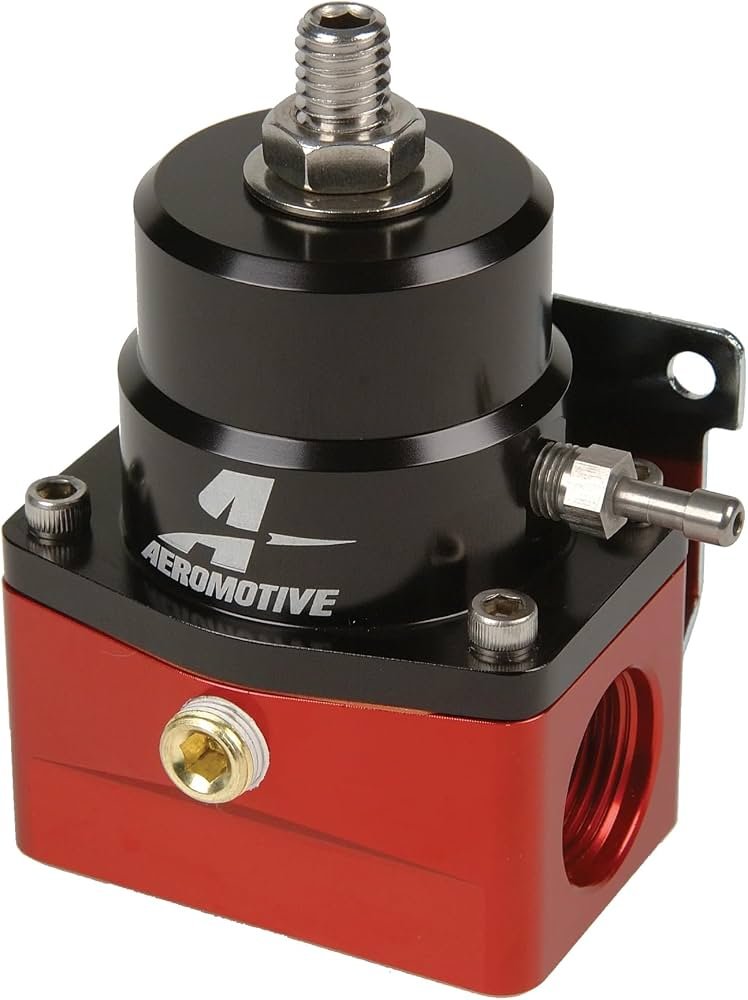
Aeromotive Fuel Pressure Regulator is a engine parts catalog item from Aeromotive. It is intended for applications compatible with the selected model and its manufacturer-specified installation requirements. Confirm the exact part number, package configuration and vehicle or equipment application before ordering; this description does not establish universal fitment.
Full Technical Description & Quality Testing Report
Category: Engine Parts
Brand: Aeromotive
Product Name: Aeromotive Fuel Pressure Regulator
Product Type: Automotive Fuel Pressure Regulation and Control Component
Part Number: To Be Confirmed (SKU-Specific)
Application: Automotive Fuel System Upgrades, Fuel Pressure Management, Performance Fuel Delivery, Fuel Injection Systems, and Compatible High-Performance Engine Applications
The Aeromotive Fuel Pressure Regulator is an aftermarket fuel system component designed to regulate and maintain fuel pressure within a compatible automotive fuel delivery system.
Its primary function is to control fuel pressure supplied to the engine's fuel injectors, carburetor, or other fuel delivery components according to the requirements of the selected fuel system.
Fuel pressure regulation is important for maintaining consistent fuel delivery and supporting the intended operation of the engine's fuel metering system.
Aeromotive manufactures different fuel pressure regulator configurations intended for fuel injection, carbureted, and performance-oriented automotive applications.
The operating characteristics of each regulator depend on its internal design, pressure adjustment mechanism, fuel compatibility, flow capacity, and intended fuel system configuration.
Many adjustable fuel pressure regulators use an internal diaphragm, spring, and valve mechanism to control fuel pressure.
The spring and diaphragm arrangement responds to pressure conditions within the regulator and adjusts fuel flow according to the selected design.
Certain Aeromotive regulator configurations are intended for return-style fuel systems, where excess fuel is directed back toward the fuel tank through a dedicated return line.
Other configurations may be designed for different fuel system arrangements, including application-specific pressure control requirements.
Depending on the selected model, the regulator may incorporate a manifold pressure reference connection to maintain an appropriate pressure differential across the fuel injectors.
Some models may provide adjustable fuel pressure settings, allowing the system to be configured according to manufacturer-approved engine and fuel system requirements.
The regulator must be selected according to the fuel pump's output characteristics, the required operating pressure, the engine's fuel demand, and the connected fuel system components.
Incorrect regulator selection may cause excessive fuel pressure, insufficient fuel delivery, unstable engine operation, or damage to fuel system components.
The Aeromotive Fuel Pressure Regulator is intended to operate as part of a complete fuel system and does not independently determine the correct fuel pressure for every engine application.
Exact housing materials, diaphragm construction, pressure adjustment range, fuel flow capacity, port dimensions, fuel compatibility, and installation requirements vary by manufacturer part number.
All technical specifications must be verified against the exact Aeromotive SKU before publication.
Before installation, verify compatibility using Aeromotive's official product specifications and installation documentation.
Confirm the following vehicle and fuel system information:
Vehicle manufacturer, model, and production year.
Engine type, displacement, and fuel delivery configuration.
Fuel injection or carburetor system requirements.
Required fuel pressure adjustment range.
Fuel pump flow capacity and operating pressure compatibility.
Fuel type and fuel system material compatibility.
Fuel regulator inlet and outlet connection specifications.
Fuel return line requirements, where applicable.
Manifold pressure reference connection requirements, where applicable.
Available mounting space and installation orientation.
Fuel pressure gauge and monitoring requirements.
Exact manufacturer part number and installation specifications.
Installation must follow Aeromotive's official instructions and applicable automotive fuel system safety procedures.
Fuel systems may contain pressurized and flammable liquids. Installation must be performed in a well-ventilated area away from open flames, sparks, smoking materials, and other ignition sources.
The fuel system must be depressurized according to the vehicle manufacturer's service procedures before fuel lines or components are disconnected.
The vehicle battery must be disconnected where required before electrical or fuel system modifications.
The regulator must be mounted in a manufacturer-approved location that provides suitable protection from excessive heat, vibration, mechanical damage, and environmental exposure.
Fuel lines, fittings, and sealing components must be compatible with the intended fuel type and operating pressure.
Where a return-style regulator is used, the return line must be correctly connected and sized according to the manufacturer's fuel system requirements.
Where a manifold pressure reference is required, the reference connection must be installed according to the manufacturer's instructions.
Fuel pressure must be adjusted using an appropriate pressure measurement instrument and the manufacturer-approved procedure.
After installation, the complete fuel system must be inspected for leaks, stable pressure regulation, and correct operation before the vehicle is returned to service.
The package is expected to contain the selected Aeromotive Fuel Pressure Regulator components.
Additional components may vary depending on the exact manufacturer part number and packaging configuration.
Possible components requiring verification include:
Aeromotive fuel pressure regulator assembly.
Integrated pressure adjustment mechanism, where applicable.
Fuel inlet and outlet connection ports.
Fuel return connection, where applicable.
Manifold pressure reference port, where applicable.
Mounting bracket or mounting components, where included.
Installation hardware, where supplied.
Manufacturer product identification label.
Installation instructions or product documentation.
Do not assume that a fuel pressure gauge, fuel pump, fuel filter, AN fittings, fuel hoses, pressure sensors, mounting brackets, replacement seals, or specialized installation tools are included unless confirmed by the manufacturer.
Verify the exact regulator configuration, pressure adjustment mechanism, fuel connection sizes, and supplied installation components before installation.
Confirm the actual package contents against the official manufacturer documentation.
Before accepting or installing the product, perform the following recommended inspections:
Verify the Aeromotive branding and exact manufacturer part number.
Inspect packaging for shipping damage, tampering, or missing components.
Examine the regulator housing for cracks, dents, or visible manufacturing defects.
Inspect the exterior finish for corrosion, scratches, or coating damage.
Verify regulator dimensions and mounting compatibility.
Inspect fuel inlet and outlet ports for damaged threads or contamination.
Confirm fuel connection dimensions against manufacturer specifications.
Check the pressure adjustment mechanism for visible damage.
Verify compatibility with the intended fuel type.
Confirm the regulator's pressure range matches the fuel system requirements.
Inspect mounting hardware and supplied fittings, where applicable.
Verify correct installation orientation and mounting security.
Confirm fuel line and return line connections follow the manufacturer instructions.
Inspect manifold pressure reference connections, where applicable.
Check the installed fuel system for leaks using manufacturer-approved procedures.
Verify regulated fuel pressure and adjustment response against manufacturer specifications.
Perform manufacturer-recommended installation and functional checks before regular vehicle operation.
Note: These are proposed quality acceptance checks and do not represent completed laboratory testing, verified fuel pressure regulation performance, or independent product certification.
No product-specific laboratory test report has been independently verified for an exact Aeromotive Fuel Pressure Regulator SKU.
The following technical parameters require confirmation through official manufacturer documentation:
| Performance Parameter | Verification Status |
|---|---|
| Product Classification | Automotive Fuel Pressure Regulator |
| Manufacturer | Aeromotive |
| Regulator Configuration | Model Dependent |
| Pressure Regulation Technology | Model Dependent |
| Housing Construction | SKU-Specific |
| Diaphragm and Seal Materials | SKU-Specific |
| Fuel Pressure Adjustment Range | Manufacturer Verification Required |
| Maximum Rated Operating Pressure | Manufacturer Verification Required |
| Fuel Flow Capacity | SKU-Specific |
| Fuel Compatibility | SKU-Specific |
| Fuel Inlet Connection Size | SKU-Specific |
| Fuel Outlet Connection Size | SKU-Specific |
| Fuel Return Connection | Model Dependent |
| Manifold Pressure Reference | Model Dependent |
| Pressure Regulation Accuracy | Not Independently Verified |
| Pressure Stability Testing | Not Verified |
| Fuel Leakage and Seal Testing | Not Verified |
| Thermal Resistance Testing | Not Verified |
| Vibration Resistance Testing | Not Verified |
| Manufacturer Laboratory Test Report | Not Verified |
No numerical pressure adjustment range, maximum pressure rating, flow capacity, pressure regulation accuracy, durability result, laboratory pass result, or certification should be published without supporting manufacturer documentation.
Actual regulator performance depends on fuel pump capacity, fuel type, fuel system pressure, return line configuration, installation quality, and the specific Aeromotive product variant.
Before publishing technical specifications or performance claims, obtain and verify the following manufacturer documents:
Official Aeromotive Fuel Pressure Regulator product datasheet.
Exact manufacturer part number and application information.
Installation and mounting instructions.
Fuel pressure adjustment range specifications.
Maximum operating pressure specifications.
Fuel flow capacity and pressure regulation data.
Compatible fuel type and material specifications.
Regulator inlet and outlet connection dimensions.
Fuel return line requirements, where applicable.
Manifold pressure reference requirements, where applicable.
Fuel pressure adjustment and calibration instructions.
Product warranty terms and conditions.
Fuel leakage and sealing test documentation, where available.
Pressure stability and mechanical durability test documentation, where available.
Applicable manufacturer quality and regulatory compliance documentation.
Automotive fuel pressure regulators may be evaluated through pressure regulation testing, flow capacity measurement, pressure stability testing, fuel leakage inspection, seal integrity testing, thermal resistance testing, and mechanical durability testing.
However, no numerical pressure accuracy, flow capacity, durability claim, maximum operating pressure, or certification should be published without verified manufacturer documentation for the exact product variant.
Engine cylinder compression testing is not a direct quality or performance test for the Aeromotive Fuel Pressure Regulator.
Relevant evaluations instead include fuel pressure regulation accuracy, pressure stability, flow performance, leakage resistance, and mechanical durability testing.
Manufacturer: Aeromotive
Product Classification: Automotive Fuel Pressure Regulator
Product Function: Fuel Pressure Regulation and Fuel Delivery Management
Regulation Technology: Model Dependent
Construction: SKU-Specific
Installation Type: Aftermarket Automotive Fuel System Replacement or Upgrade
Vehicle Applications: Compatible Internal Combustion Engine and Performance Fuel System Applications
Fuel Compatibility: SKU-Specific
Fuel Pressure Adjustment Range: Manufacturer Verification Required
Maximum Operating Pressure: Manufacturer Verification Required
Fuel Flow Capacity: Manufacturer Verification Required
Fuel Inlet Connection: SKU-Specific
Fuel Outlet Connection: SKU-Specific
Fuel Return Connection: Model Dependent
Manifold Pressure Reference: Model Dependent
Mounting Configuration: Model Dependent
Pressure Regulation Performance: Not Independently Verified
Manufacturer Part Number: Pending Confirmation
Manufacturer Testing Status: Product-Specific Report Not Verified
Documentation Status: Manufacturer Verification Required
Official Manufacturer Website:
https://www.aeromotiveinc.com/
Important: Aeromotive Fuel Pressure Regulators are available in multiple configurations with different pressure adjustment ranges, fuel compatibility requirements, flow capacities, connection sizes, and installation arrangements. Confirm the exact manufacturer SKU, fuel system type, fuel pump compatibility, required operating pressure, fuel line configuration, and installation instructions before purchase or installation. Incorrect regulator selection, improper fuel pressure adjustment, incompatible fittings, or poor installation may cause unstable fuel delivery, engine performance problems, fuel leakage, or fire hazards. Fuel system installation and testing must follow the manufacturer's approved safety procedures.
To ensure 100% plug-and-play fitment, our technical specialists run every order through our nationwide OEM interchange database before freight shipment.
| Specification | Donor vehicle & component verification |
|---|---|
| Part Condition | Certified Pre-Owned OEM Used Component |
| Part / Casting Number | AVP-0034 |
| Donor Mileage | Aeromotive |
| Testing Procedure | Cold compression tested, borescope cylinder wall inspection, and leak-down test passed. |
| Warranty Protection | 1-Year Comprehensive Replacement Guarantee |
| Freight Shipping | Commercial liftgate freight included (3-5 business days across mainland USA) |
Engine arrived securely bolted to a heavy-duty wooden pallet with shrink wrap. Compression test was exactly as advertised. Dropped right into my truck and fired up with zero CEL codes. Saved over $2,000 compared to dealer crate motor!
Your auto parts cart is currently empty.
Shop Used Auto Parts